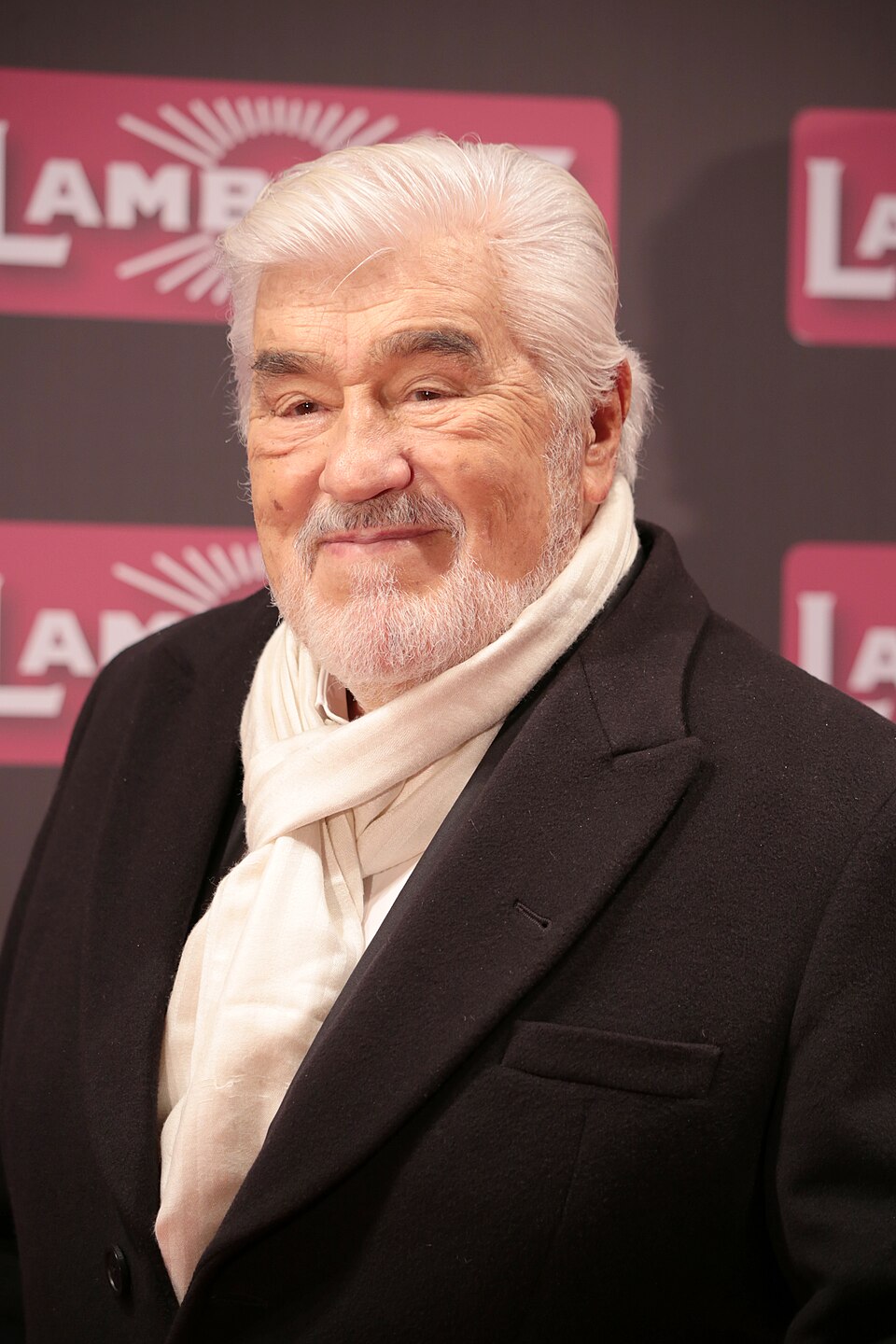
The Iconic Directors Behind Mario Adorf's Enduring Filmography
To truly appreciate the depth and breadth of Mario Adorf's incredible career, one must look beyond his memorable performances and delve into the esteemed circle of directors who shaped his cinematic journey. The
Mario Adorf Biografie is not merely a chronicle of roles, but a vivid tapestry woven by the hands of some of the most influential filmmakers in world history. His filmography reads like an excerpt from cinema's hall of fame, a testament to Adorf's unparalleled versatility and the magnetic appeal he held for visionaries across continents and genres. From gritty Westerns to profound German dramas and biting Hollywood satires, Adorf's collaborations illuminate a career defined by artistic fearlessness and a profound connection to storytelling.
A Panoramic View of World Cinema Through Adorf's Eyes
Mario Adorf's ability to seamlessly navigate diverse cinematic landscapes is perhaps best understood by examining the roster of directors who sought his talent. These aren't just names; they represent distinct artistic movements, national cinemas, and genre-defining styles. Adorf’s willingness to immerse himself in these varied worlds speaks volumes about his acting philosophy and his commitment to the craft. His career provides a unique lens through which to observe the evolution of filmmaking from the mid-20th century onwards.
Adorf found himself equally at home under the nuanced direction of European auteurs as he was in the grand spectacles of American cinema, or the stylized violence of Italian productions. This global reach is a defining characteristic of his
Mario Adorf Biografie. It wasn't just about acting in films; it was about participating in the creation of cinematic history alongside its most innovative architects.
The German Lens: Shaping a Nation's Story and Identity
Adorf's deep roots in German cinema are undeniable, and his collaborations with several pivotal German directors played a crucial role in shaping his identity as an actor and in reflecting the complex social and historical landscape of his homeland.
*
Wolfgang Staudte: A giant of post-war German cinema, Staudte was instrumental in rebuilding the industry and often tackled themes of guilt, responsibility, and reconstruction. Adorf's work with Staudte would have positioned him at the forefront of this crucial period, embodying characters wrestling with Germany's past and future.
*
Edgar Reitz: Known for his monumental *Heimat* series, Reitz's work is characterized by an epic scope and a profound exploration of German provincial life and history. Adorf's gravitas and authentic presence would have been invaluable in bringing Reitz's meticulously crafted worlds to life, lending a human face to grand historical narratives.
*
Rainer Werner Fassbinder: The enfant terrible of the New German Cinema, Fassbinder was prolific, provocative, and uncompromising. His films often explored the darker side of human nature and societal decay. Adorf's intense screen presence and capacity for raw emotional depth made him a perfect fit for Fassbinder's stylized and often bleak dramatic worlds, challenging audiences with his unflinching portrayals.
*
Volker Schlöndorff: Another luminary of the New German Cinema, Schlöndorff gained international acclaim for literary adaptations like *The Tin Drum*. His work often possessed a sophisticated, intellectual edge. Adorf's ability to deliver nuanced performances, balancing intellectual depth with emotional resonance, would have been key to these high-calibre European productions.
*
Helmut Dietl: A master of German satire, Dietl keenly observed and critiqued German society, particularly the Bavarian milieu, with wit and precision. Adorf's often larger-than-life persona, combined with his comedic timing and profound understanding of character, made him an ideal interpreter of Dietl's sharp social commentaries.
These collaborations underscore Adorf's commitment to German filmmaking, even as his international star rose. They highlight his dedication to telling stories that resonated deeply with his own cultural heritage, enriching his already impressive
Mario Adorf Biografie with roles that explored the very soul of a nation.
Crossing Borders: From Hollywood Wit to European Noir and Global Grit
Adorf's appeal transcended national boundaries, leading him to work with some of the most iconic international directors, each bringing a unique flavour to his expansive career. This international dimension truly rounds out
Mario Adorf's Legendary Collaborations: A World Cinema Hit List.
*
Billy Wilder: The legendary Hollywood director, known for his sharp wit, sophisticated storytelling, and genre-hopping brilliance (from *Some Like It Hot* to *Sunset Boulevard*). Adorf's presence in a Wilder film would have placed him in an entirely different, highly polished cinematic universe, demanding precision, comedic timing, and a nuanced understanding of character. His versatility allowed him to adapt effortlessly to Wilder's sophisticated style.
*
Sam Peckinpah: Nicknamed "Bloody Sam," Peckinpah was an American auteur famous for his visceral action, cynical themes, and groundbreaking use of slow motion violence, particularly in Westerns and thrillers like *The Wild Bunch*. Adorf's rugged look, commanding presence, and capacity for portraying complex, often morally ambiguous characters would have made him an ideal fit for Peckinpah's raw and uncompromising vision.
*
Claude Chabrol: A prominent figure of the French New Wave, Chabrol was a master of psychological thrillers and suspense, often dissecting the dark underbelly of the bourgeoisie. Adorf's ability to exude both menace and vulnerability would have been perfectly suited to Chabrol's nuanced explorations of human nature and societal hypocrisy.
*
Franco Rossi: An Italian director, Rossi often focused on humanist themes and character-driven dramas. Working with Rossi would have allowed Adorf to explore more introspective and emotionally resonant roles within the rich tradition of Italian cinema, showcasing his dramatic depth beyond more action-oriented parts.
The Thrill of the Wild West: Pioneering the Italo-Western
Perhaps one of the most exciting dimensions of Adorf's international collaborations lies in his work with
Sergio Corbucci, whom the reference context specifically names as "one of the fathers of the Italo-Western." Corbucci's films, often darker, more brutal, and stylistically distinct than Sergio Leone's, pushed the boundaries of the Western genre.
Adorf’s imposing physicality, his ability to convey both menace and a certain world-weariness, made him a natural fit for the anti-heroes and formidable villains that populated Corbucci's dusty, unforgiving landscapes. Working with Corbucci, Adorf contributed to a genre that redefined cinematic storytelling and influenced countless filmmakers worldwide. This experience highlights the sheer range of Adorf’s capabilities, transitioning from high-brow European drama to the gritty, stylized violence of the Spaghetti Western. To delve deeper into this incredible range,
Explore Mario Adorf's Career: From Wilder to Italo-Western Masters.
The Adorf Effect: Versatility, Longevity, and the Actor's Craft
What does Mario Adorf’s extensive list of director collaborations tell us about his craft and his enduring legacy? It speaks to a rare combination of qualities that made him indispensable to such diverse talents:
1.
Unmatched Versatility: Adorf was not typecast. He could transition from the villainous heavy in an Italo-Western to a nuanced character in a German historical drama, or a comedic figure in a Hollywood satire, all with convincing authenticity.
2.
Profound Presence: Whether on screen for a moment or the lead, Adorf commanded attention. His intense eyes, powerful voice, and distinctive physicality left an indelible mark.
3.
Adaptability: He understood the specific demands of each director's vision, be it Fassbinder's theatrical stylization, Wilder's subtle comedic timing, or Peckinpah's raw naturalism. This adaptability is a key lesson for any aspiring actor aiming for a long and impactful career.
4.
Artistic Trust: The fact that so many world-class directors sought him out repeatedly or for pivotal roles indicates a deep level of trust in his artistic judgment and his ability to deliver.
The
Mario Adorf Biografie, when viewed through the lens of his directorial partnerships, reveals an actor who was not merely performing roles but actively participating in the grand cinematic conversation of his time. He was a bridge between cultures, genres, and artistic philosophies, always pushing the boundaries of what was possible on screen.
Conclusion
Mario Adorf's filmography is more than just a list of films; it is a vibrant chronicle of collaboration with the titans of cinema. From the pioneering German voices like Wolfgang Staudte and Edgar Reitz to the radical vision of Rainer Werner Fassbinder, and from Hollywood's witty maestro Billy Wilder to the raw power of Sam Peckinpah and the genre-defining Sergio Corbucci, Adorf has stood shoulder-to-shoulder with the best. His
Mario Adorf Biografie is a testament to an actor whose unique talent, chameleon-like versatility, and profound presence made him an indispensable artistic partner for a generation of iconic directors. It's a legacy that continues to inspire, reminding us of the extraordinary magic that unfolds when exceptional talent meets visionary direction.